

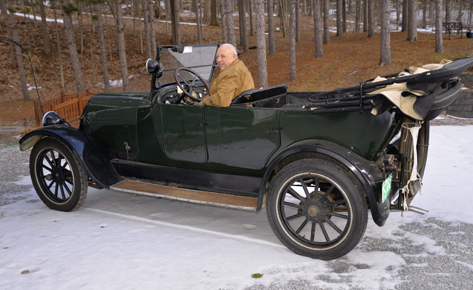
This “moment” may be food for thought… but more exactly it’s food for the car. Food for most cars is gasoline and today we are going to give this wondrous stuff some thought. Well, not really the gas so much as the way the vehicles gets its “food”. Most of the early cars with their “up-draft” carbs got gas the Newtonian way… gravity. The gas tank was located in a higher plane than the carb and the gas ran downhill to the vaporizer. Fords kept this primitive practice probably longer than any other major brand with the Model A gas tank located in the top of the cowl right in front of the front seat passengers.
A plus was the fuel gauge… it was a float gauge right in the tank sticking through the dash and visible right there above the other instruments. Although simple there were other problems with the gravity system: Steep inclines often defied gravity… or actually they didn’t and the climbing car would have to turn around and back up the hill as the tank was usually behind the engine. Higher quality cars… read that as more expensive… solved the problem another way: They pressurized the fuel system. The tank was sealed and from a small hand pump in the dash, the operator “pumped up” fuel pressure, usually 2 or 3 pounds.
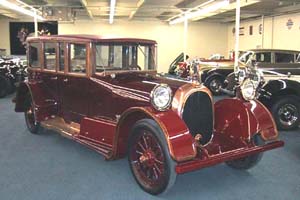
The only way out for the gas was up (or down) the fuel line to the carb. After the engine was running, a small mechanical pump driven by the camshaft would take over for the dash hand pump and the car would generate its own fuel pressure. This system, like Rod Rice’s Cadillac and many other cars of the teens and twenties, required 3 fuel lines, pumps, tight seals, etc. Stewart Warner discovered the vacuum tank. This marvel was loved or hated by the majority of car owners lasting slightly longer than the pressurized style.
The vacuum tank was a clever tank within a tank that mounted on the firewall of your car. Most cars were still “up-draft” so the vacuum tank was well above the carb. Running off vacuum from the intake manifold, the vacuum tank sucked gas from the cars main rear tank and stored it in the bottom of the vacuum tank. Then it was Newton again as gravity fed the lower carb, controlled by the carb float and needle and seat. Using our esteemed mentor, Rod Rice, again, he threw the vacuum tank from his quality Stevens into the bushes and put on an electric fuel pump. Others too have had “vacuum tank problems”. A certain Willys Knight in the club for years doesn’t have enough manifold vacuum to assure not running out of gas… and it often does.
Recognizing that all these systems could be improved on, most manufacturers by the end of the twenties were installing mechanical diaphragm fuel pumps. These units would suck gas from the tank and push it up hill to the newer top-of-the engine mounted downdraft carbs. They were pretty trouble free and you have one on almost any US made new car today. (Proof reader notes that current model vehicles use electronic fuel injection instead of a carb.)
I did mention that some cheats have installed electronic fuel pumps on their older cars. Largely a European idea… Jaguar even mounted two of these electrical wonders in the gas tanks of some of their cars… and doesn’t Saab continue to do so? JC Whitney will sell you a 6-volt electric fuel pump and you can hide it under the backseat of your old car… but the clicking sound as it builds up pressure will give you away. How do cars eat? Pretty much as we’ve mentioned… the way they were brought up… just like peopl